
GPT-5.2 and Next-Generation Large Language Models: Architecture, Capabilities, and Limitations
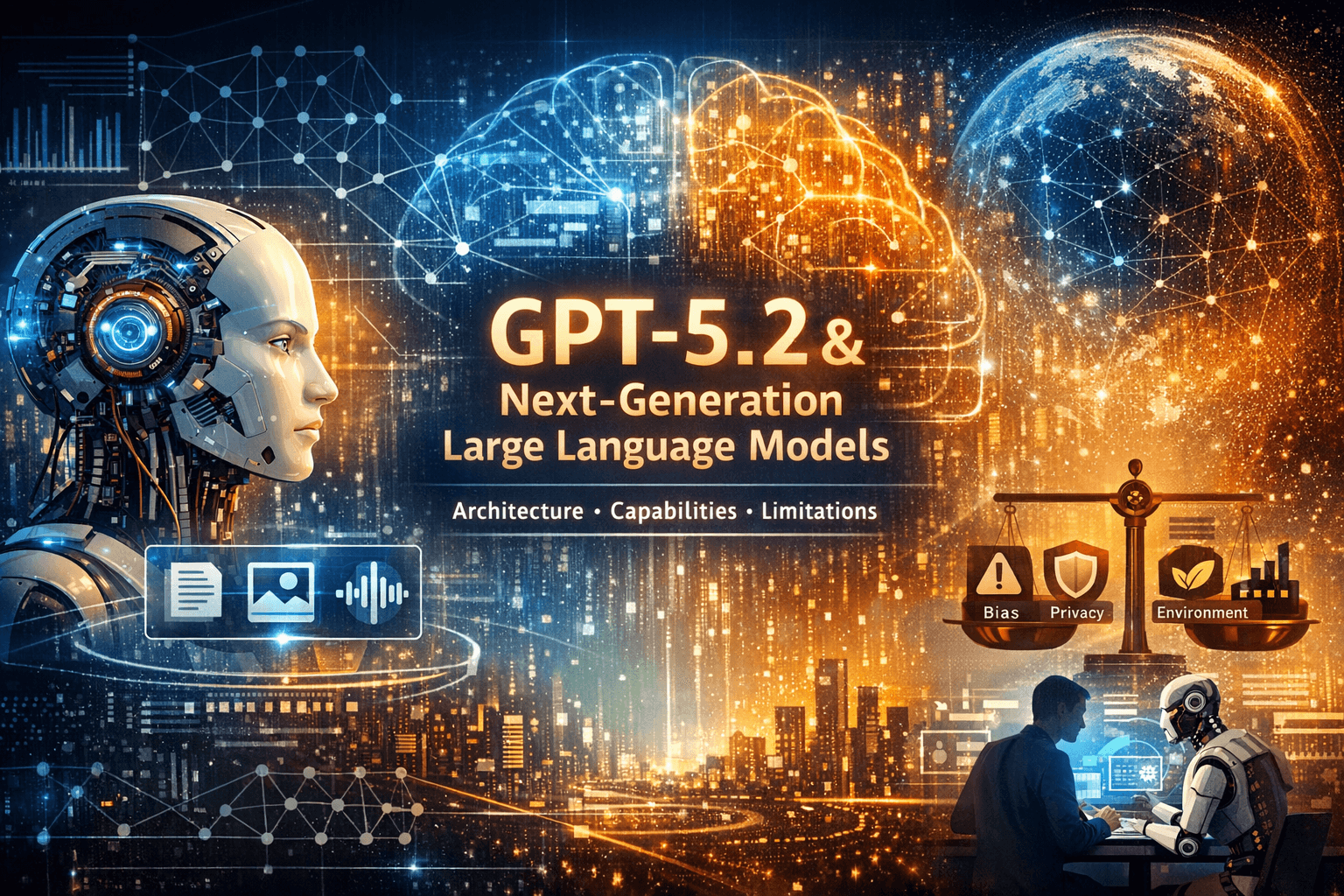
Introduction: The Rise of Next-Generation AI Models
Artificial intelligence has entered a new era of sophistication and utility. With the arrival of GPT-5.2, OpenAI’s most advanced large language model to date, we’re witnessing the transformation of AI from mere conversational tools to powerful cognitive systems. Unlike earlier generations, GPT-5.2 goes beyond text generation—it understands, reasons, and adapts dynamically across multiple modalities.
The rise of next-generation large language models (LLMs) represents a leap not just in computational capability, but also in contextual intelligence, ethical awareness, and creative problem-solving.
Evolution from GPT-3 to GPT-5.2
When GPT-3 was introduced in 2020, its 175 billion parameters revolutionized machine learning scale. GPT-4 (2023) brought multimodal comprehension. Now, GPT-5.2 delivers persistent memory and autonomous tool use.
- GPT-3 (2020): Large-scale text generation and NLP breakthroughs.
- GPT-4 (2023): Visual understanding and foundational reasoning.
- GPT-5.2 (2025): Persistent memory, multimodal logic, and real-time autonomy.
The Core Architecture of GPT-5.2
Hybrid Attention Mechanisms
GPT-5.2 integrates sparse activation layers, allowing it to scale intelligently by using only the most relevant parts of its network during inference. This drastically improves efficiency and reduces latency.
Dynamic Data Pipelines
Unlike static predecessors, GPT-5.2 utilizes regulated real-time updates. This ensures responses remain factual and temporally relevant, bridging the gap between training cut-offs and the present day.
Multi-Modal Integration
GPT-5.2 can describe an image, compose a matching soundtrack, and summarize the context—all within one seamless interaction. It treats text, audio, and visual data as native, interchangeable tokens.
Breakthrough Capabilities
Contextual Memory
Accepts long-term conversational memory, retaining context over multiple sessions. Ideal for complex enterprise workflows and personalized tutoring.
Autonomous Tool Use
Truly acts as an agent. It can call APIs, query databases, and manipulate software directly, moving from "chatting" to "doing".
Comparing Leading Models
| Model | Developer | Key Strength | Limitation |
|---|---|---|---|
| GPT-5.2 | OpenAI | Multimodal & Memory | High Inference Cost |
| Gemini 2 | Google DeepMind | Search Integration | Access Availability |
| Claude 3 | Anthropic | Safety & Ethics | Slower Training |
| LLaMA 3 | Meta AI | Open Source | Less "Creative" |
Conclusion: The Promise and Peril
GPT-5.2 represents a monumental leap, merging cognitive reasoning with emotional understanding. Yet, challenges in hallucination, bias, and energy consumption remain.
"As we look toward the future of next-generation LLMs, one thing is certain: AI will not just assist humanity—it will amplify what it means to be human."
For the latest AI research insights, visit the OpenAI Research Blog.